
About Orofacial Myofunctional Therapy (OMT)
What is Orofacial Myofunctional Therapy (OMT)?
Orofacial Myofunctional Therapy (OMT) is an evidence-based approach that focuses on optimizing the function of the oral cavity, tongue, lips, facial, and pharyngeal muscles.
A speech-language pathologist with specialized training on OMT typically designs OMT treatment plans based on individualized assessments, collaborating with dental, ENT, respiratory, and pediatric specialists when appropriate.
International research demonstrates that OMT can promote healthy nasal breathing, minimize adverse oral habits, improve symptoms of obstructive sleep apnea (OSA), and support pediatric sleep health, facial muscle coordination, and dental alignment. OMT is a comprehensive approach that addresses function, appearance, and wellbeing.
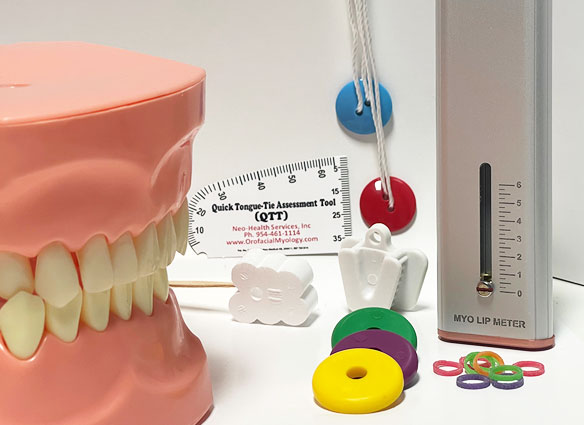
Clinical Manifestations
Sleep-Disordered Breathing (SDB)
- Chronic mouth breathing, particularly at rest and during sleep.
- Habitual snoring.
- Polysomnography-confirmed or suspected Obstructive Sleep Apnea (OSA) .
Poor Oral Habits & Atypical Swallowing Patterns
- Tongue thrust (forward tongue movement during swallowing or rest).
- Persistent finger sucking, lip biting, or prolonged pacifier use.
- Incomplete lip seal at rest.
Associated Functional & Structural Abnormalities
- Malocclusion, such as anterior open bite, deep bite.
- Atypical swallowing patterns.
- Abnormal facial muscle tone or poor neuromuscular coordination.
Therapeutic Objectives
Restore and maintain proper nasal breathing
Encourages patients to use nasal breathing preferentially during rest, activity, and sleep, ensuring appropriate air filtration, humidification, warming, and nitric oxide regulation, which have protective health effects.
Normalize key oral functions
Corrects abnormal swallowing, chewing, and sucking patterns to prevent adverse pressure on dental arches and jaw development.
Establish physiologic orofacial rest posture
Promotes a stable resting tongue position against the palate, natural lip closure, and neutral head-neck alignment to maintain upper airway stability.

Eliminate secondary detrimental habits
Systematic muscle retraining and behavioral interventions are used to eliminate habits that compromise oral structure and breathing function.
Support dental and orthodontic treatment
Provides a stable muscular environment for dental and orthodontic therapies, helping consolidate treatment results and prevent relapse.

Optimize facial muscle function
Increases muscle coordination and endurance, facilitating improved facial aesthetics and nonverbal communication abilities.
Multidisciplinary Collaborative Team
OMT follows evidence-based practice principles and is delivered by a collaborative team including speech-language pathologists, dental surgeons, otolaryngologists, pediatricians and occupational therapists, etc. Each professional contributes their expertise in assessment, training, structural correction, airway management, and sleep-disorder care, ensuring long-term, comprehensive outcomes for patients.